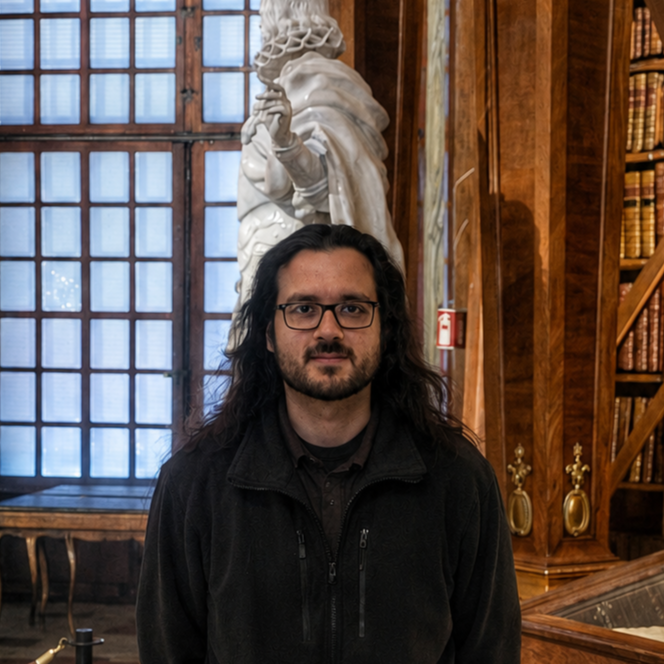
Dr. Lucas Corrêa Lopes
About Me
I am a mathematician. I was a Ph.D. student at University of Brasília under the supervision of Dr. Pavel Zalesski with a research period at University of Milano-Bicocca under the supervision of Dr. Thomas Weigel. I completed my Ph.D. in April 2026. You can find the complete information about my education in my CV (the university logos are in the image on the left). My Erdős number is 4.
Currently I am a postdoctoral researcher at Federal University of Minas Gerais.
Research Interests
- Profinite groups, profinite Bass-Serre theory, geometric group theory, block theory for profinite groups.
Papers
-
Lucas C. Lopes, Pavel Shumyatsky and Pavel A. Zalesskii (2024) Profinite groups with abelian Sylow subgroups, Communications in Algebra, DOI: 10.1080/00927872.2023.2239352.
Abstract
We extend the definition of a finite A-group to profinite groups and give a description of profinite A-groups as a triple semidirect product of two prosoluble groups with a semisimple group, extending an old result of A. M. Broshi to the profinite case. We also prove that a profinite A-group with finitely generated non-trivial Fitting subgroup is metabelian-by-(finite exponent). If, in addition, G is finitely generated then it is virtually metabelian polycyclic.
-
Lucas C. Lopes and Pavel A. Zalesskii (2025) Prosoluble subgroups of the profinite completion of the fundamental group of compact 3-manifolds, Journal of the London Mathematical Society, DOI: 10.1112/jlms.70330.
Abstract
We give a description of finitely generated prosoluble subgroups of the profinite completion of 3-manifold groups and toral relatively hyperbolic virtually compact special groups.
-
Simone Blumer, Julian Feuerpfeil, Lucas C. Lopes and Claudio Quadrelli (2026+). A cohomological translation of the Kaplansky radical for profinite groups. Available on arxiv.
Abstract
The Kaplansky radical of a field consists of the nonzero elements represented by every norm quadratic form in two variables. D. Kijima and M. Nishi conjectured that, for quadratic extensions, the Kaplansky radicals are related by the norm map in a manner analogous to Hilbert’s Theorem 90. Although this H-conjecture was disproved by K.J. Becher and D.B. Leep, it is known to hold for several important classes of fields. We introduce a cohomological analogue of the Kaplansky radical for arbitrary profinite groups and primes p, defined as the orthogonal of H^1(G,F_p) with respect to the cup product with itself. For absolute Galois groups, this recovers the classical Kaplansky radical when p=2 and the p−radical of Dario–Engler for arbitrary p. We also formulate a group-theoretic analogue of the H-conjecture, proving that, for fields, it is equivalent to the original conjectural property and depends only on the maximal pro-2 quotient of the absolute Galois group. We establish this property for broad classes of fields, including local and global fields, rational function fields, and all fields whose maximal pro-p Galois group is of elementary type. Beyond its arithmetic origins, we investigate the property for general pro-p groups, proving its stability under several natural group-theoretic constructions and obtaining new examples, including generalized right-angled Artin pro-p groups and fundamental pro-p groups of suitable graphs of groups, many of which cannot occur as maximal pro-p Galois groups.
-
Lucas C. Lopes, Pavel A. Zalesskii (2026+). Pro-C groups acting on profinite trees. Available on arxiv.
Abstract
We provide necessary conditions for pro-*C* subgroups to embed into free profinite products, where *C* is a variety of finite groups that does not contain all finite groups. Under suitable hypotheses, we extend this result to profinite groups acting *k*-acylindrically on profinite trees. Finally, we show that these results can be applied to important classes of profinite groups.
-
(Temporary title) Frattini cover of PSL_2(q) (joint with Thomas Weigel): soon.
-
(Temporary title) On the Magnus property for profinite groups (joint with Geovane M. L. Andrade, Martino Garonzi, Claude Marion): soon.
-
(Temporary title) On the profinite completion of graph braid groups: in preparation.
-
(Temporary title) Block theory and profinite groups acting on profinite trees: in preparation.
My coauthors
Geovane M. L. Andrade (Brasília, BRA), Simone Blumer (Milano, ITA), Julian Fuerpfeil (Milano, ITA & Besançon, FRA), Martino Garonzi (Ferrara, ITA), Claude Marion (São Paulo, BRA), Claudio Quadrelli (Como, ITA), Pavel Zalesski (Brasília, BRA), Pavel Shumyatsky (Brasília, BRA), Thomas Weigel (Milano, ITA).
Writings
- My doctoral thesis: Profinite groups acting acylindrically on profinite trees.
Book Recommendations
Starting your undergrad? Here are some books that shaped the beginning of my academic career:
- Abstract Algebra (Dummit & Foot).
- Examples of Groups (Weinstein).
- Field and Galois Theory (Morandi).
- Principles of Mathematical Analysis (Rudin).
- Real Mathematical Analysis (Pugh).
- Linear Algebra and Its Applications (Lax).
- General Topology (Willard).
- An Introduction to Algebraic Topology (Rotman).
If you are interested in learn the fundamentals for the profinite Bass-Serre theory, I suggest you to follow the short sequence:
Teaching
- Calculus 1: 2024-2025 at Universidade de Brasília
Mathematics around the world
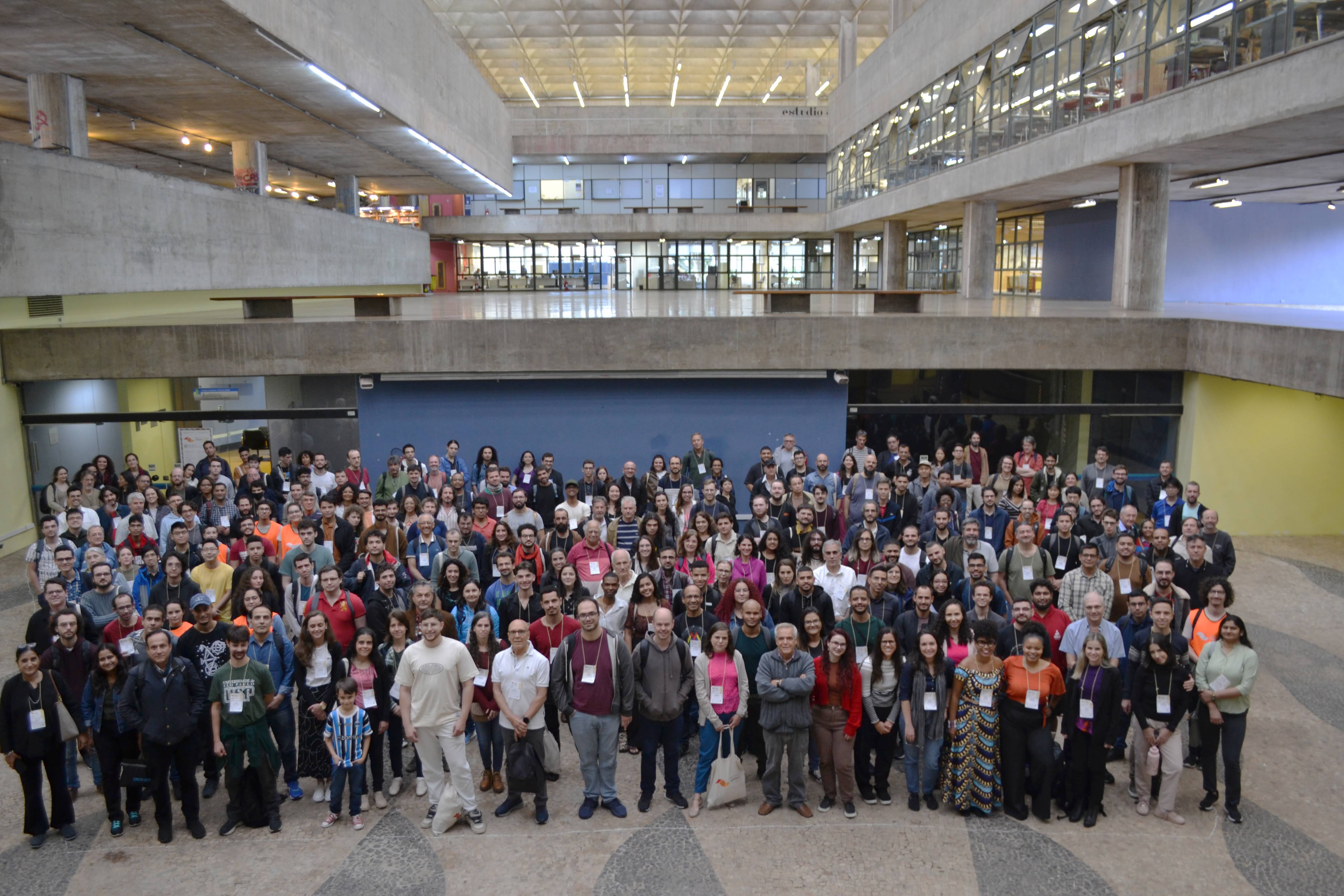
Universidade de São Paulo
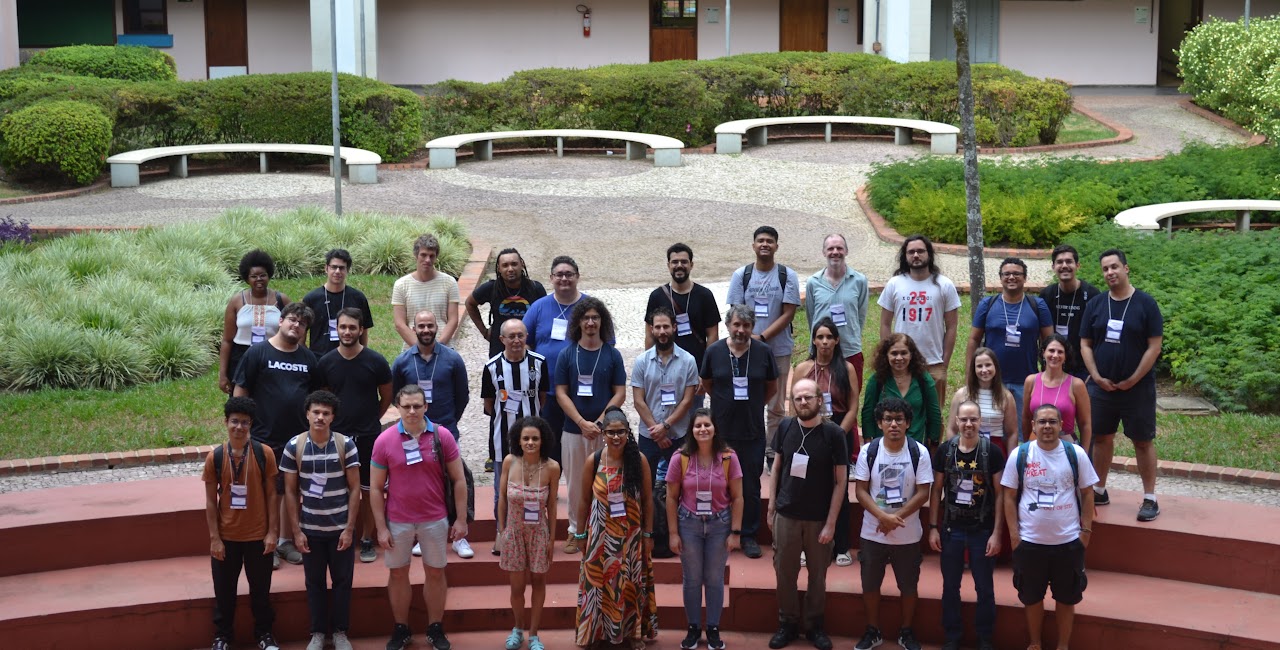
Universidade Federal de Minas Gerais
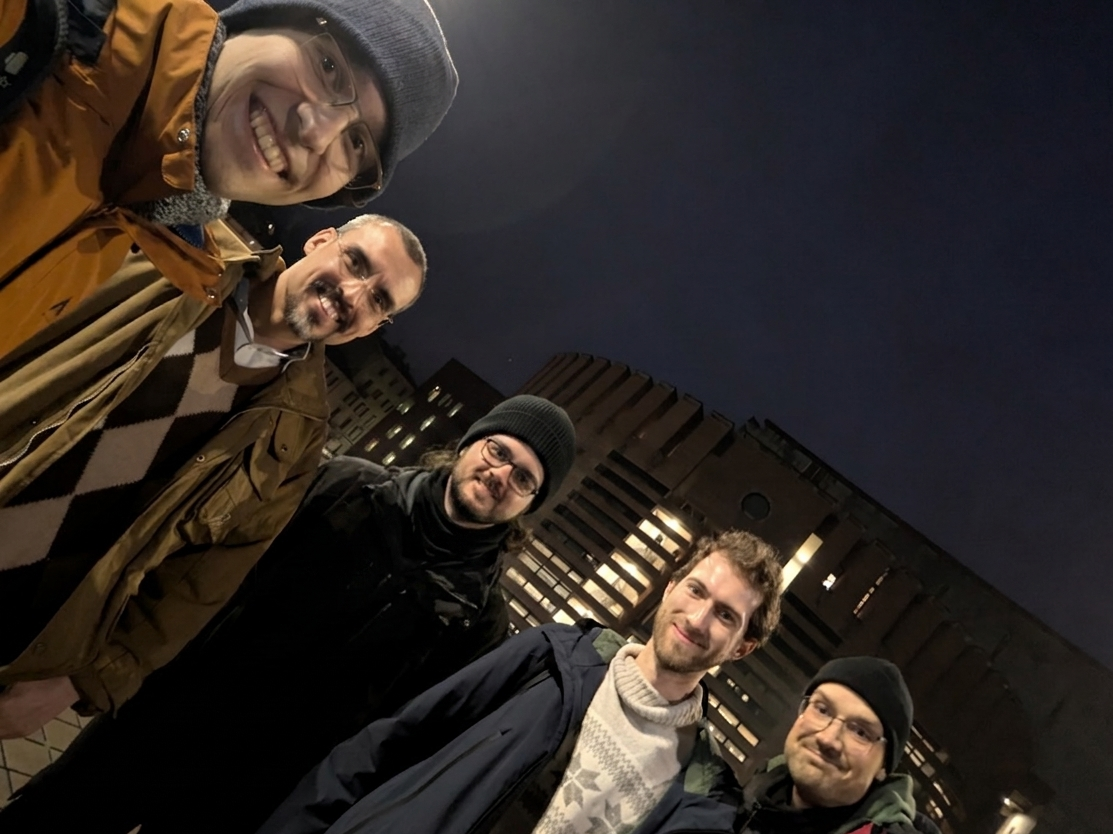
Università degli Studi dell'Insubria
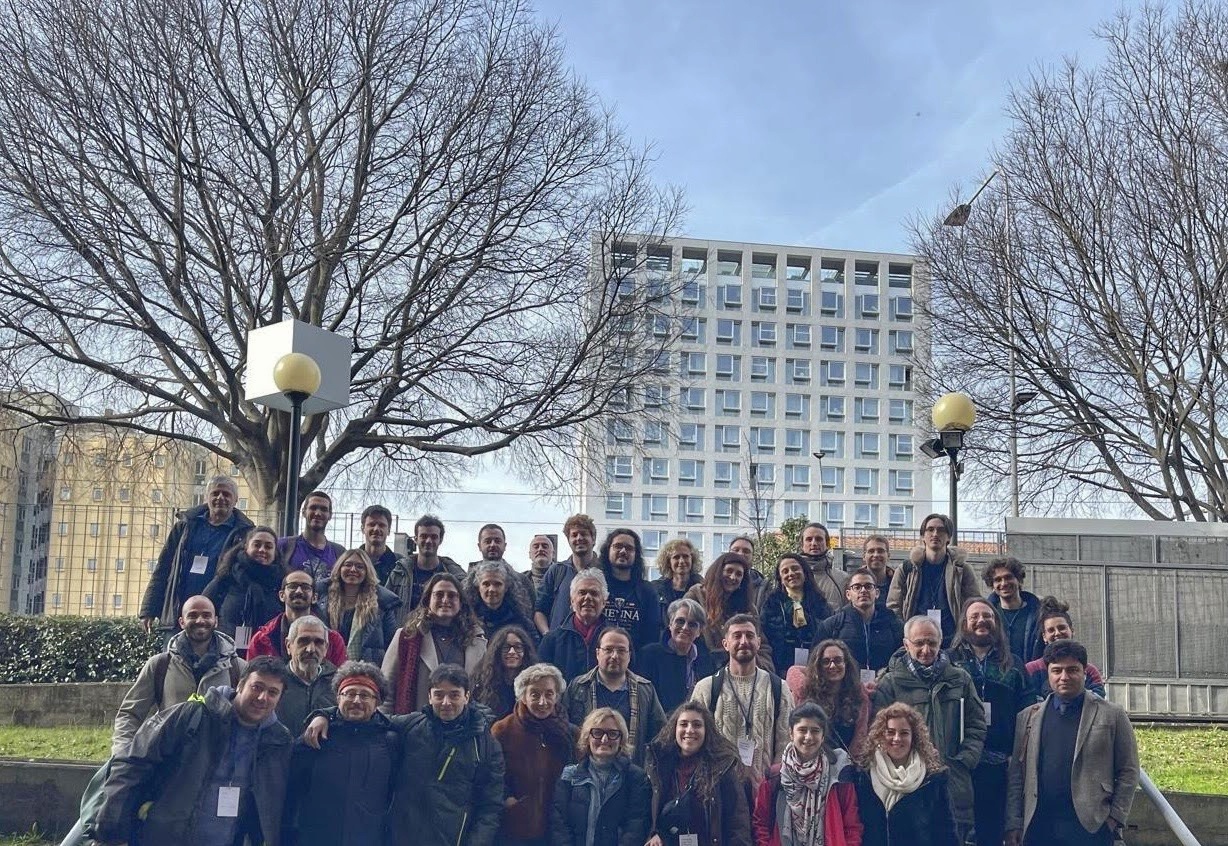
Università degli Studi di Firenze
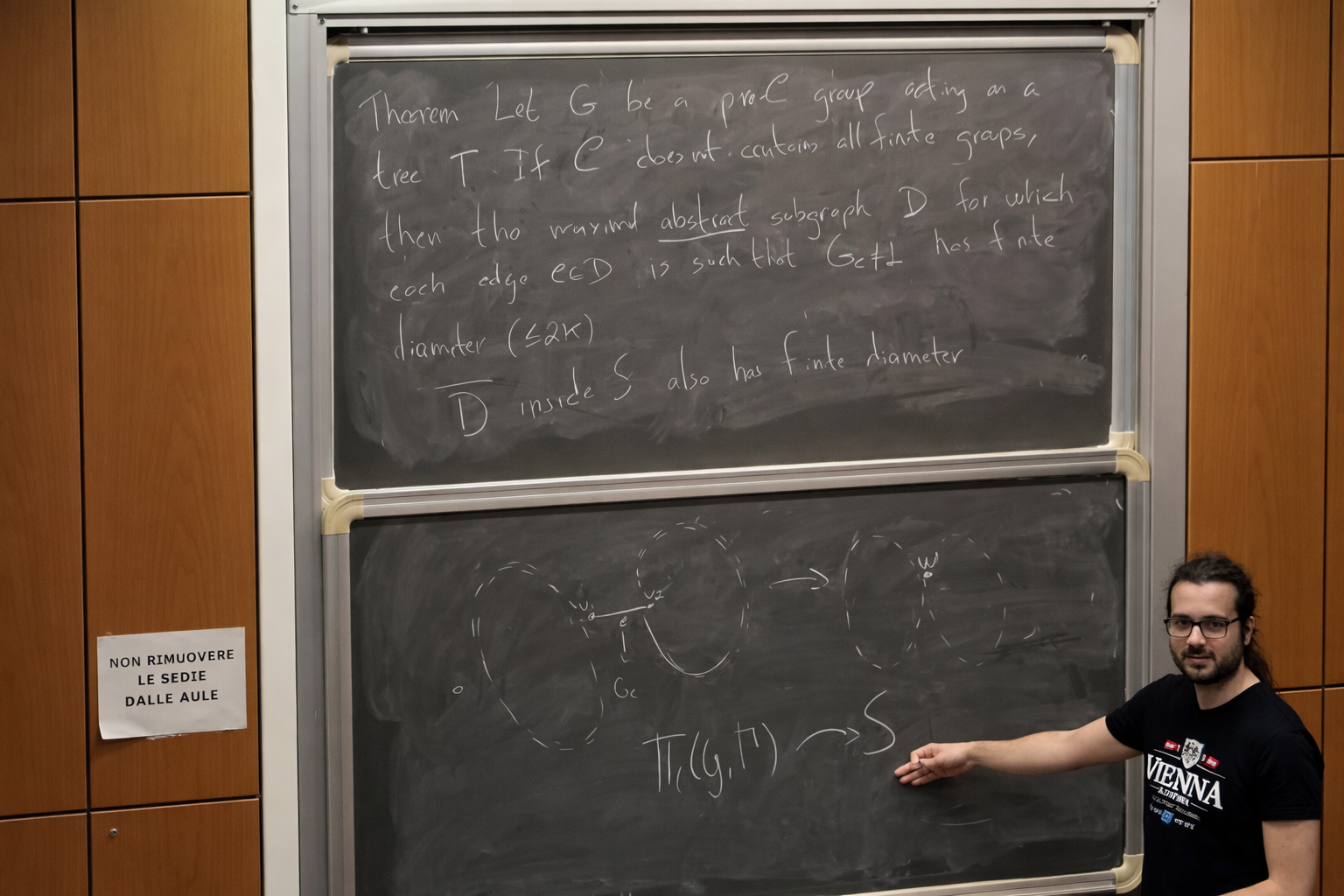
Università degli Studi di Milano-Bicocca
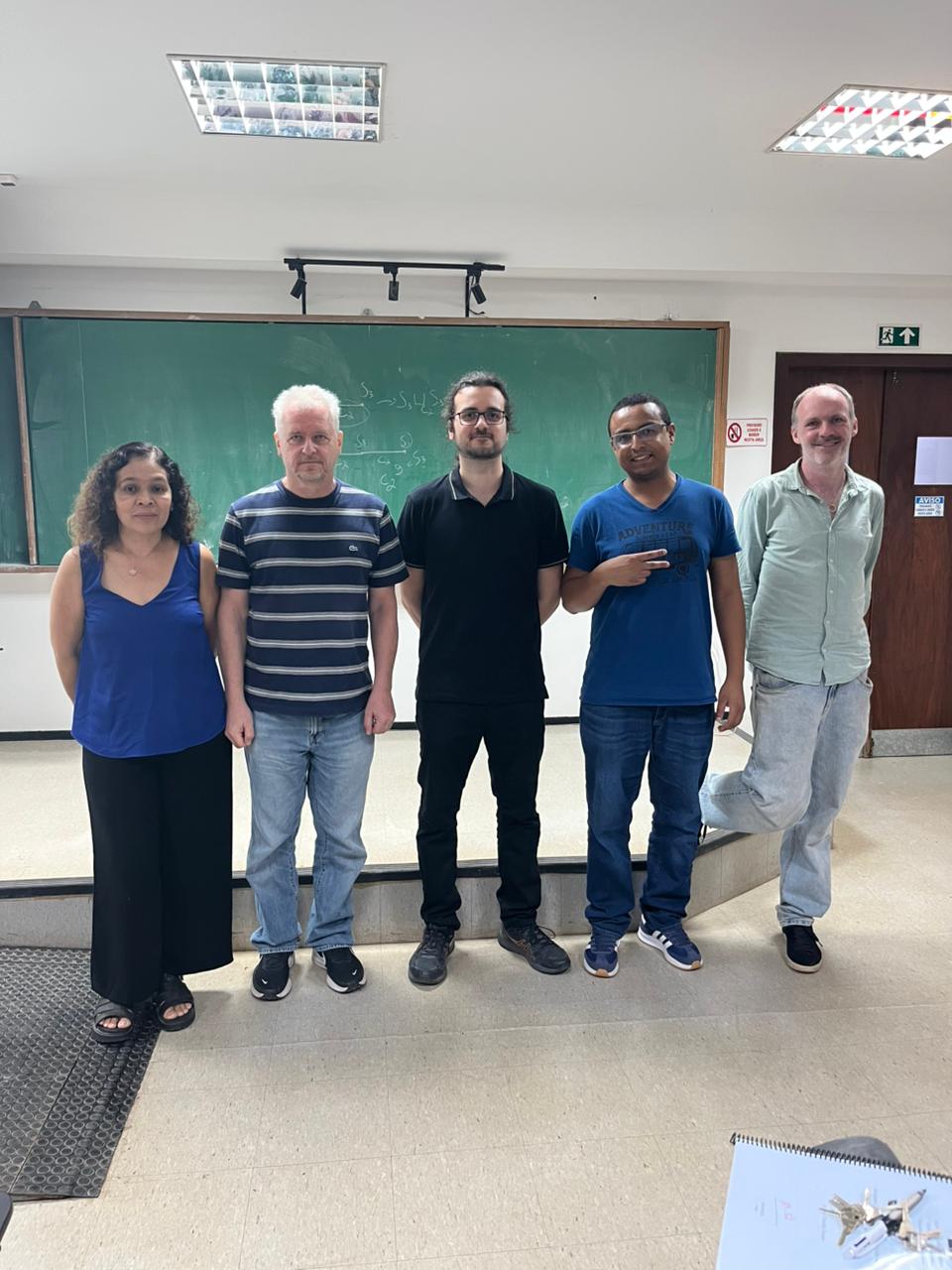
Universidade de Brasília